
How we Made it Happen™
Boiler Management
- An excess air management scheme was implemented, supported by integrated real-time dashboards, enhancing combustion efficiency and improving operational control, , delivering $4,800,000 in annual savings.
- A boiler loading strategy was developed and applied using optimization curves to reduce energy consumption while maintaining steam output.
- An optimization tool for boiler loading, along with a supporting energy strategy document, was introduced to compliment the operations production plan.
- The existing steam loss management program was strengthened by identifying, prioritizing, and repairing leaks and faulty equipment, resulting in the recovery of lost steam and condensate across the plant.
Cogen Optimization
- A turbine augmentation steam dashboard was implemented to maximize export opportunities from cogeneration, balancing the cost of steam production against electricity generation incentives.
- A real-time cogeneration optimization dashboard was developed to provide live performance insights and recommend optimal operating modes.
- Utility forecasted pricing was leveraged to enable dynamic, forecast-driven operating strategies to respond to market conditions and deliver $385,000 additional annual profit.
Energy Conservation
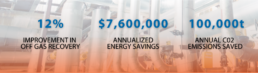
- Value was realised through the recovery of waste off-gas to boilers, enabled by improved system coordination and constraint management. This delivered approximately $1,000,000 in annual savings, while also reducing CO₂ emissions and steam generation costs. Operating limits were defined to consistently recover over 95% of the waste gas, displacing natural gas usage.
- Real-time monitoring of steam venting frequency and cost was implemented to standardize operator response and reduce steam demand, delivering $258,000 in savings.
- Developed a recommendation for the future use of a waste liquid fuel stream whether it should be consumed on-site as fuel or sold off-site. The financial implications of both options were evaluated to provide a clear basis to support informed leadership decision-making.
- Reduction in steam consumption through the optimization of production unit feed allocation, generating $134,000 in savings. Steam usage controls were also introduced to minimize steam demand and improve process efficiency, supported by clear guidelines for achieving standby conditions with reduced energy consumption.
- A real-time performance dashboard was developed to provide visibility of system performance and optimization opportunities across reactor units, ensuring continuous improvement while adhering to operational constraints.